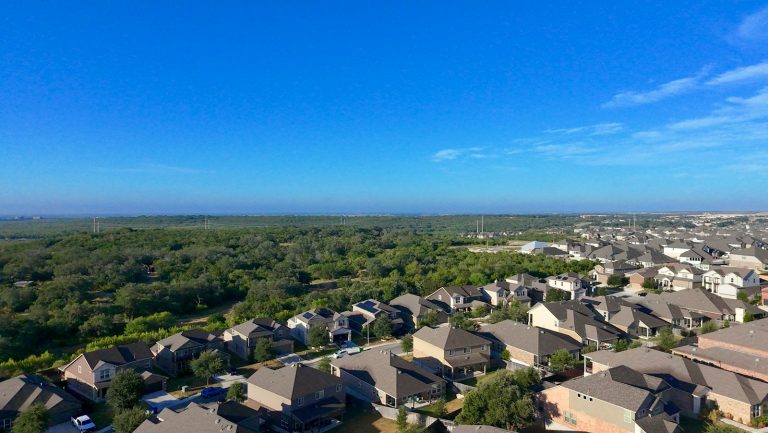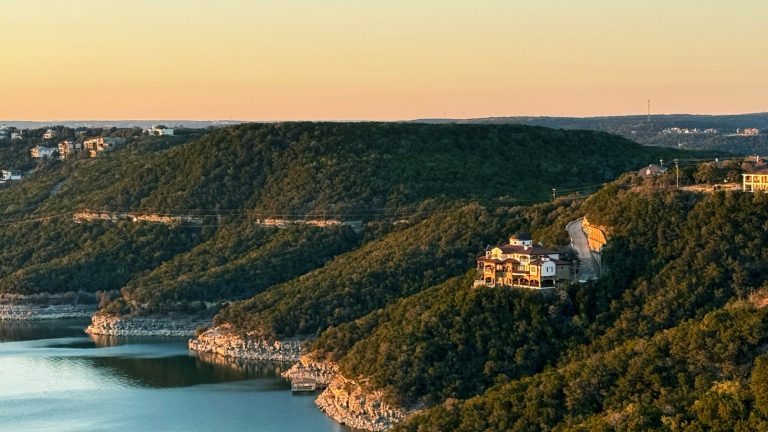
Bee Cave sits about 14 miles west of downtown Austin, right where the city gives way to the Texas Hill Country. It has a nationally recognized dark sky, Lake Travis ISD schools, and the lowest city property tax rate in the region. It also has Hwy. 71 at 5 p.m. and very few starter homes. This guide lays out the real pros and cons of living in Bee Cave, Texas, so you can decide if it fits your family, budget, and commute before you start touring homes.
If you’re earlier in the process, start with 10 Things To Know Before Moving To Bee Cave, Texas. If you already know Bee Cave is on your list, keep reading. I’ll get specific about taxes, traffic, schools, and which neighborhoods fit which buyers.
Key takeaways
- Biggest pro: Bee Cave’s city tax rate is $0.02 per $100 of value, the lowest in the region, because sales tax from the Hill Country Galleria and other local businesses funds most of the city budget.
- Biggest con: Getting in costs a lot. Most homes fall in the upper to luxury price tiers, and true starter homes are rare.
- Schools: The city of Bee Cave is served by Lake Travis ISD, which earned an A (91/100) in the Texas Education Agency’s 2025-26 ratings.
- Commute: Hwy. 71 and RM 620 are the only main routes out, so rush hour backs up. Test-drive your commute before you buy.
- Hidden costs: A low city rate doesn’t mean a low tax bill. The combined rate is about $1.64 per $100, and some newer neighborhoods add MUD/PID assessments and HOA dues.
- Best fit: Families and move-up buyers who want top schools, Hill Country scenery, and everyday shopping close by, and who can live with a suburban commute.
What are the pros and cons of living in Bee Cave?
The main pros of living in Bee Cave are the very low city property tax rate, Lake Travis ISD schools, Hill Country scenery with protected dark skies, and the shopping and dining at the Hill Country Galleria. The main cons are high home prices, rush-hour traffic on Hwy. 71 and RM 620, a total tax bill that’s still substantial, and steady construction as the area grows.
| Pros of living in Bee Cave | Cons of living in Bee Cave |
|---|---|
| Lowest city tax rate in the area ($0.02 per $100) | High price of entry, few starter homes |
| Lake Travis ISD (A-rated district) | Hwy. 71 / RM 620 rush-hour traffic |
| Hill Country views, parks, and Lake Travis nearby | Combined tax bill is still large; MUDs/PIDs in some areas |
| International Dark Sky Community | Ongoing growth and construction |
| Shopping, dining, and errands without driving to Austin | Limited nightlife; HOA rules in most neighborhoods |
Pros of living in Bee Cave, Texas
1. The lowest city property tax rate in the area
This is the pro most people don’t know about until someone shows them a tax breakdown. The city of Bee Cave charges just $0.02 per $100 of taxable value, and the city says that rate is the lowest in the region and has not gone up in 20 years. For the 2025-26 budget, the average homestead’s city tax came to about $154 for the year, according to city documents reported by Community Impact.
How does the city stay funded? Sales tax. The Hill Country Galleria and the retail along Hwy. 71 and RM 620 generate enough revenue that homeowners carry very little of the city budget. For comparison, Lakeway adopted a city rate of about $0.17 per $100 for the same year (Community Impact).
| City tax per $100,000 of taxable value | Bee Cave | Lakeway |
|---|---|---|
| City rate (FY 2025-26) | $0.0200 per $100 | $0.16964 per $100 |
| City tax on $100,000 | $20 per year | about $170 per year |
| City tax on $700,000 | $140 per year | about $1,188 per year |
Keep in mind this is only the city line on your bill. See the cons section below for the full picture.
2. Lake Travis ISD schools
The city of Bee Cave is served by Lake Travis ISD, and schools are the reason a lot of my buyers start looking here. The district earned an A rating (91 out of 100) in the Texas Education Agency’s 2025-26 accountability ratings (Community Impact). In the district’s 2025 campus results, Lake Travis High School, Bee Cave Middle School, and Lake Pointe Elementary all earned A’s, while Bee Cave Elementary earned a B (Lake Travis ISD).
School zones depend on the street, not the city name, so always confirm the zoned campuses for a specific address with the district. If schools are your top priority, read Eanes ISD vs. Lake Travis ISD or compare more districts in Best School Districts for Homebuyers in Austin.
3. Hill Country scenery and outdoor access
You get rolling hills, live oaks, and views that feel far from the city, even though Austin is a short drive away. Lake Travis is minutes north for boating and paddleboarding. Hamilton Pool Preserve is just west on Hamilton Pool Road (reservations required), and the area has plenty of trails, parks, and greenbelts. For families who spend weekends outside, this is a big daily-life upgrade over a typical suburb.
4. One of Texas’s few Dark Sky Communities
In April 2023, Bee Cave became the 7th International Dark Sky Community in Texas. In practice, that means outdoor lighting rules that keep the night sky dark. New development has to follow responsible lighting principles (DarkSky International), so you can still see stars from your backyard. It’s a small thing until you live with it, and then most people won’t give it up.
5. Everyday shopping and dining close to home
With the Hill Country Galleria, grocery stores, restaurants, medical offices, and a movie theater all in town, you rarely need to drive into Austin for errands. That matters more than people think when the only routes east are busy highways. You get Hill Country living without giving up convenience.
6. Housing for several stages of life
Bee Cave’s housing ranges from established family neighborhoods to golf communities, gated luxury enclaves, and estate lots of an acre or more. Move-up buyers, executives, and empty nesters who want a single-story with a view can all find something here. See The Best Bee Cave Neighborhoods for a closer look at each one.
Cons of living in Bee Cave, Texas
1. The price of entry is high
Bee Cave is mostly an upper to luxury price-tier market. If you’re a first-time buyer hoping for an entry-level home, you’ll find very few options inside the city. Most buyers are moving up or relocating with equity from another market. Run your numbers first with How Much House Can I Afford in Austin, Texas?.
2. Traffic on Hwy. 71 and RM 620
This is the con I hear most from residents. Hwy. 71 runs through the middle of Bee Cave and connects the whole Lake Travis area, so it gets heavy at rush hour. Crashes on Hwy. 71 in Bee Cave rose from 124 in 2019 to 151 in 2022, according to TxDOT data reported by Community Impact. TxDOT finished a raised-median safety project on the corridor in early 2026 (Community Impact), and the city has asked regional planners to prioritize widening Hwy. 71 (Community Impact). Until that happens, expect congestion and some construction.
My tip: Before you write an offer, drive from the house to your office at the hour you’d actually commute, both ways. Twenty minutes at noon can turn into much longer at 7:45 a.m.
3. Your total tax bill is still significant
The low city rate is real, but the city is only one line on your bill. The city’s published combined rate is about $1.644 per $100 of value: $1.0397 for Lake Travis ISD, $0.3758 for Travis County, $0.0904 for ESD #6, $0.1180 for the Travis County Healthcare District, and $0.02 for the city (City of Bee Cave). Multiply that by Bee Cave home values and the bill is still a real monthly expense.
Some newer communities also carry MUD or PID assessments, and most neighborhoods have HOA dues. Ask for the property’s full tax-entity breakdown and the HOA budget before you go under contract. The 7 Hidden Costs of Buying a Home in Austin covers the rest.
4. Growth means change
Bee Cave grew from a small village into a busy suburb in about two decades, and growth hasn’t stopped. That brings new restaurants and amenities, and also construction, more traffic, and open land turning into rooftops. If you’re buying for a specific view or a quiet back fence, find out what’s planned for the land around it.
5. Suburban pace, HOA rules, and homeowners insurance
If you want live music on a weeknight, you’ll be driving into Austin. Most neighborhoods have HOAs with architectural rules, which protect home values but limit what you can build or change. In wooded Hill Country areas, homeowners insurance can also cost more than you’re used to, so get insurance quotes during your option period, not after closing.
Bee Cave neighborhoods: which one fits you?
Here’s a quick fit guide. Price tiers are relative to the Austin metro and change with the market, so treat them as a starting point.
| Neighborhood | Vibe | Good fit for | Price tier |
|---|---|---|---|
| Spanish Oaks | Gated, private golf club, big Hill Country lots | Luxury buyers who want privacy and amenities | Ultra-luxury |
| Falconhead | Golf-course community, established, family-friendly | Move-up families who want amenities | Upper to luxury |
| Lake Pointe | Established neighborhood near Lake Pointe Elementary | Families who want to walk or bike to school | Upper |
| The Homestead | Newer homes, community amenities | Buyers who want newer construction | Upper |
| Belvedere | Estate lots, wide-open views | Buyers who want land and space | Luxury |
| Rocky Creek | Newer luxury homes off Hamilton Pool Rd. | Buyers who want Hill Country views and newer builds | Luxury |
For deeper profiles, read The Best Bee Cave Neighborhoods. Some neighborhoods with a Bee Cave mailing address sit outside city limits, which changes the city tax line and sometimes the school zone, so confirm both for any home you’re considering, along with whether it carries a MUD or PID.
Bee Cave vs. Lakeway vs. Dripping Springs
Most Bee Cave buyers also tour Lakeway and Dripping Springs. Here’s how the three compare at a glance.
| Bee Cave | Lakeway | Dripping Springs | |
|---|---|---|---|
| School district | Lake Travis ISD | Lake Travis ISD | Dripping Springs ISD |
| Feel | Hill Country suburb with a retail hub | Lake and resort community | Small-town Hill Country |
| Main commute routes | Hwy. 71, RM 620 | RM 620 | U.S. 290 |
| City tax rate (FY 2025-26) | $0.02 per $100 | about $0.17 per $100 | Check the current rate |
| Price tier | Upper to ultra-luxury | Upper to luxury | Mid to luxury |
Go deeper with The Pros and Cons of Living in Lakeway, Texas and The Pros and Cons of Living in Dripping Springs, Texas, or compare more options in Top 10 Suburbs Near Austin, TX. Also considering a closer-in option? Read Westlake vs. Bee Cave.
Is Bee Cave a good place to live? Who it’s best for
Bee Cave is a great fit if you:
- Want Lake Travis ISD schools and a family-friendly suburb
- Value Hill Country views, dark skies, and quick access to parks and the lake
- Like having shopping and dining in town instead of driving to Austin
- Are buying in the upper or luxury price tiers, or moving up with equity
Bee Cave may not be the right fit if you:
- Need an entry-level price point
- Commute to east or north Austin daily at peak hours
- Want walkable nightlife or an urban lifestyle
- Don’t want HOA rules
Bee Cave home-buying checklist
- Confirm the zoned elementary, middle, and high school for the exact address
- Get the full tax-entity breakdown, including any MUD or PID
- Ask for the HOA budget, dues, and architectural rules
- Drive your commute at rush hour, both directions
- Get homeowners insurance quotes during your option period
- Check what’s planned for nearby vacant land
Frequently asked questions about living in Bee Cave
Is Bee Cave, Texas a good place to live?
Yes, for most families and move-up buyers. Bee Cave has Lake Travis ISD schools, the lowest city property tax rate in the region, Hill Country scenery, and plenty of shopping close by. The main tradeoffs are high home prices and rush-hour traffic on Hwy. 71 and RM 620.
What school district is Bee Cave in?
The city of Bee Cave is served by Lake Travis ISD, which earned an A (91/100) in the Texas Education Agency’s 2025-26 accountability ratings. Confirm the zoned campuses for any specific address with the district.
What is the property tax rate in Bee Cave, TX?
The city of Bee Cave charges $0.02 per $100 of taxable value. The city’s published combined rate for all taxing units (school district, county, ESD, healthcare district, and city) is about $1.644 per $100. Some neighborhoods also have MUD or PID assessments.
How far is Bee Cave from downtown Austin?
Bee Cave is about 14 miles west of downtown Austin. Drive times vary a lot by time of day because most traffic uses Hwy. 71 or RM 620.
Is Bee Cave more expensive than Lakeway?
Home prices in both are in the upper to luxury tiers, and both are in Lake Travis ISD. Bee Cave’s city tax rate is much lower ($0.02 vs. about $0.17 per $100), which can make a noticeable difference in your yearly bill.
Why is Bee Cave called a Dark Sky Community?
In April 2023, Bee Cave became Texas’s 7th International Dark Sky Community. The city has outdoor lighting standards that limit light pollution so residents can see the stars.
The bottom line on the pros and cons of living in Bee Cave
Weighing the pros and cons of living in Bee Cave usually comes down to two questions: does the price tier work for you, and can you live with the commute? If the answer to both is yes, you get A-rated schools, a city that barely taxes you, Hill Country views, and dark skies that most of Austin gave up years ago.
Thinking about a move? I’m Nick Garcia, an Austin-area REALTOR who helps families buy across Bee Cave, Lakeway, and the Hill Country. Reach out and I’ll set up a Bee Cave neighborhood tour or a custom home search. Selling first? Ask me about One Percent Listing ATX, our 1% listing program.
Sources
- City of Bee Cave: Finance Department (property tax rates)
- City of Bee Cave: Bee Cave Passes Budget
- Community Impact: Bee Cave maintains $0.02 tax rate for FY 2025-26
- Community Impact: Lake Travis-Westlake area tax rates (Oct. 2025)
- Community Impact: Lake Travis ISD TEA ratings
- Lake Travis ISD: District earns A rating in 2025
- City of Bee Cave: International Dark Sky Community
- DarkSky International: Bee Cave
- Community Impact: Hwy. 71 median project
- Community Impact: Austin metro transportation updates (Feb. 2026)
- Community Impact: TxDOT narrows scope of Hwy. 71 project